
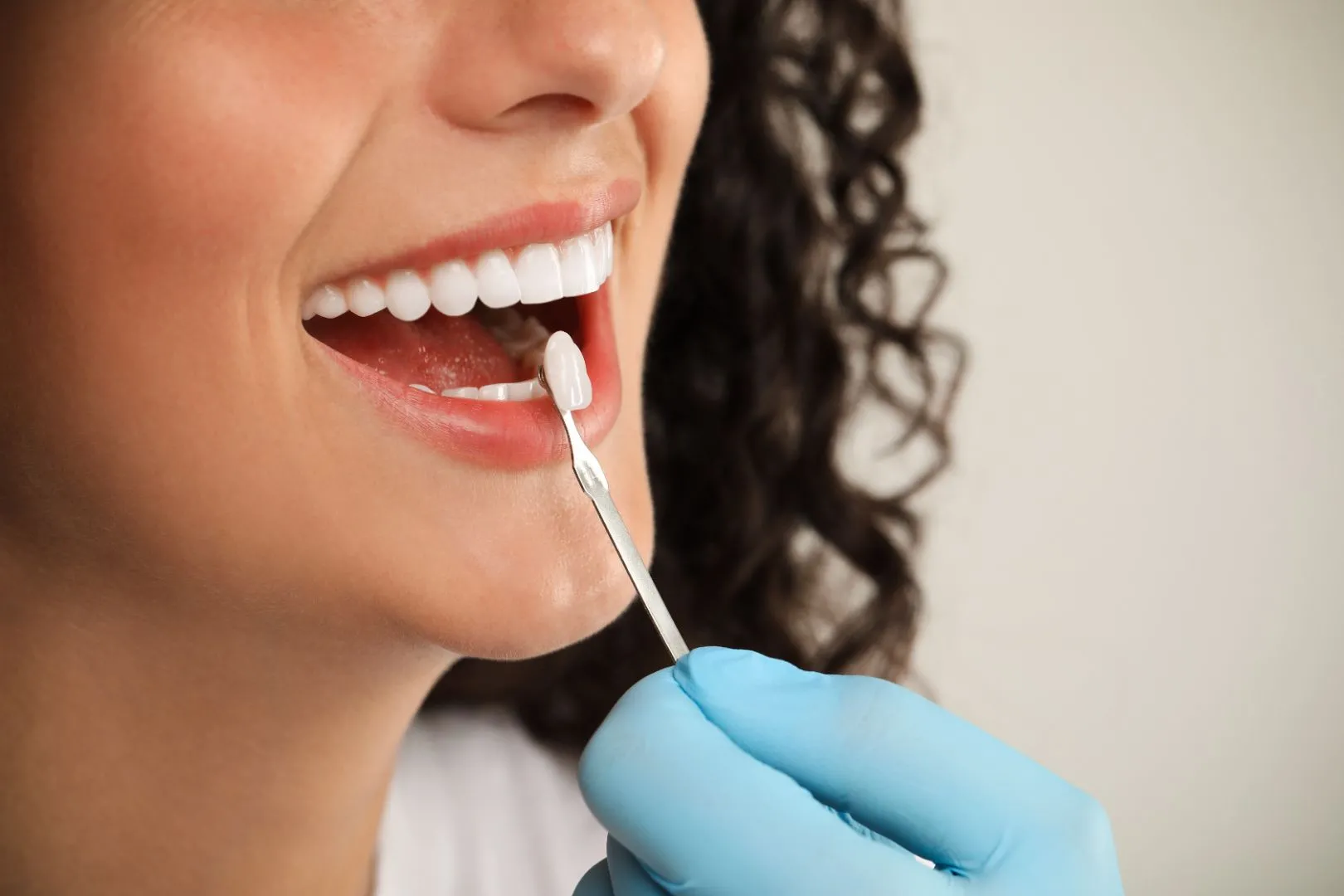
If you wear a full denture, or you are about to need one, the question is rarely "dentures or implants." It is narrower than that: how much stability do you want, and what are you willing to trade for it. There are three realistic paths, and they differ far more in daily life than they do on paper.
The Three Options, Plainly
- A traditional denture rests on the gums and is held by suction and fit. Nothing is anchored into bone. It is the least invasive and least expensive route, and it can be made quickly.
- An implant-retained overdenture — what most people mean by "snap-in dentures" — uses two to four implants with attachments. The denture clips onto them and you take it out at night to clean it. It still rests partly on the gums, but it no longer moves when you talk or chew.
- A fixed full-arch restoration, commonly All-On-4®, uses four or more implants to support an arch of teeth that stays in. You do not remove it; you clean around it. It is the closest thing to having your own teeth back, and it is the most involved of the three.
What Actually Changes Day to Day
Chewing. This is the difference people notice first. A conventional upper denture covers the palate, which dulls taste and temperature. A lower conventional denture has almost no ridge to grip and is the one patients struggle with most. Anchoring to implants removes the movement problem, and a fixed arch removes the palate coverage as well.
Confidence in conversation. A denture that shifts while you speak changes how much you speak. Removing that variable is, for many patients, the real reason they pursue implants — not chewing.
Adhesive. Implant-retained and fixed options do not use it. That alone is a daily quality-of-life change.
Cleaning. A snap-in overdenture comes out and gets brushed, like a conventional denture, plus the attachments need attention. A fixed arch is cleaned in place with a water flosser and specialized floss, and it is checked and professionally cleaned at recall visits. Neither is harder than caring for teeth, but they are different routines, and the fixed option is less forgiving if it gets neglected.
The Bone Loss Issue Nobody Mentions Upfront
Jawbone maintains itself in response to pressure through the tooth roots. Remove the roots and the ridge slowly resorbs. This is why a denture that fit well five years ago now rocks, and why long-term denture wearers develop the collapsed lower-face profile that ages the face independently of skin.
A denture sitting on the gums does not stop this. Implants do, in the area around them, because they transmit load into the bone the way roots did. That is not a cosmetic footnote — it is the reason the decision gets harder the longer it is delayed. A patient with a well-preserved ridge has more options than the same patient eight years later.
"Do I Have Enough Bone?"
Usually the honest answer is "more often than you would expect, and we will know from the scan." Two things are worth knowing:
- All-On-4® is designed partly around this problem. Angling the back implants lets them engage denser bone toward the front of the jaw, which is often why a patient who was told they were not an implant candidate turns out to be one.
- Where bone volume genuinely falls short, bone grafting can rebuild it. That adds healing time before implants are placed, but it does not close the door — our post on the different types of grafts covers what that involves.
Planning is done from a 3D scan rather than a flat X-ray, because implant position depends on bone depth, nerve position, and sinus location — none of which a two-dimensional image shows accurately. Our CBCT imaging is used for exactly this.
Timeline: What To Expect
A traditional denture is measured in weeks. Implant treatment is measured in months, because the implants need to integrate with the bone before they carry full load. In many full-arch cases a temporary set of fixed teeth is placed the same day the implants go in, so patients are not without teeth during healing — but the final restoration comes later, once integration is confirmed.
It is worth being realistic about that gap rather than surprised by it. The healing period is the part that makes implants durable.
How To Choose
A reasonable way to think about it:
- Cost is the main constraint, or the denture is a stopgap while a longer plan is decided. A traditional denture is a legitimate choice, and a well-made one serves people well.
- The lower denture will not stay put and that is the whole problem. An implant-retained overdenture solves it with the fewest implants and the smallest step up in cost.
- You want teeth that stay in, no palate coverage, and the closest thing to natural function. A fixed full-arch restoration is the option that delivers that.
The comparison worth making is not first-year cost, but cost and function over ten to fifteen years — including relines, remakes, and the ongoing bone loss under a conventional denture.
What Upkeep Looks Like Over Ten Years
Every option needs maintenance; they just need different kinds. A conventional denture sits on a ridge that keeps changing shape, so it needs periodic relines to stay snug and, eventually, a remake. Most wearers also find the fit drifts gradually enough that they adapt to a loose denture without noticing how much chewing they have given up.
An implant-retained overdenture is anchored, but the plastic attachment inserts that grip the implants wear out with use and are replaced at recall visits — a small, routine swap rather than a repair. The denture itself can still need a reline where it rests on tissue.
A fixed full-arch restoration is the lowest-maintenance day to day and the most dependent on hygiene. The implants themselves are checked at recall, the bite is adjusted if it shifts, and the prosthesis can be removed by the surgeon for a deep cleaning when needed. Gum inflammation around implants is the main long-term risk, and it is largely preventable with consistent home care.
Why Have An Oral Surgeon Plan It
Full-arch work is surgical planning as much as it is restorative dentistry: bone assessment, extraction of any remaining teeth, implant position, grafting where needed, and sedation so the surgical visit is comfortable. Our post on why an oral surgeon places implants explains where that training matters most.
Talk Through Your Options
Babston Oral Surgery treats patients across Mobile and Baldwin County, including Foley, Fairhope, and Saraland. If you are weighing dentures against implants — or you have been told implants are not possible for you — a consultation with a 3D scan will give you a specific answer instead of a general one. Contact our office to request an appointment.